Chalking Exterior Paint in Kansas Sun: Do the Hand Test This Fall
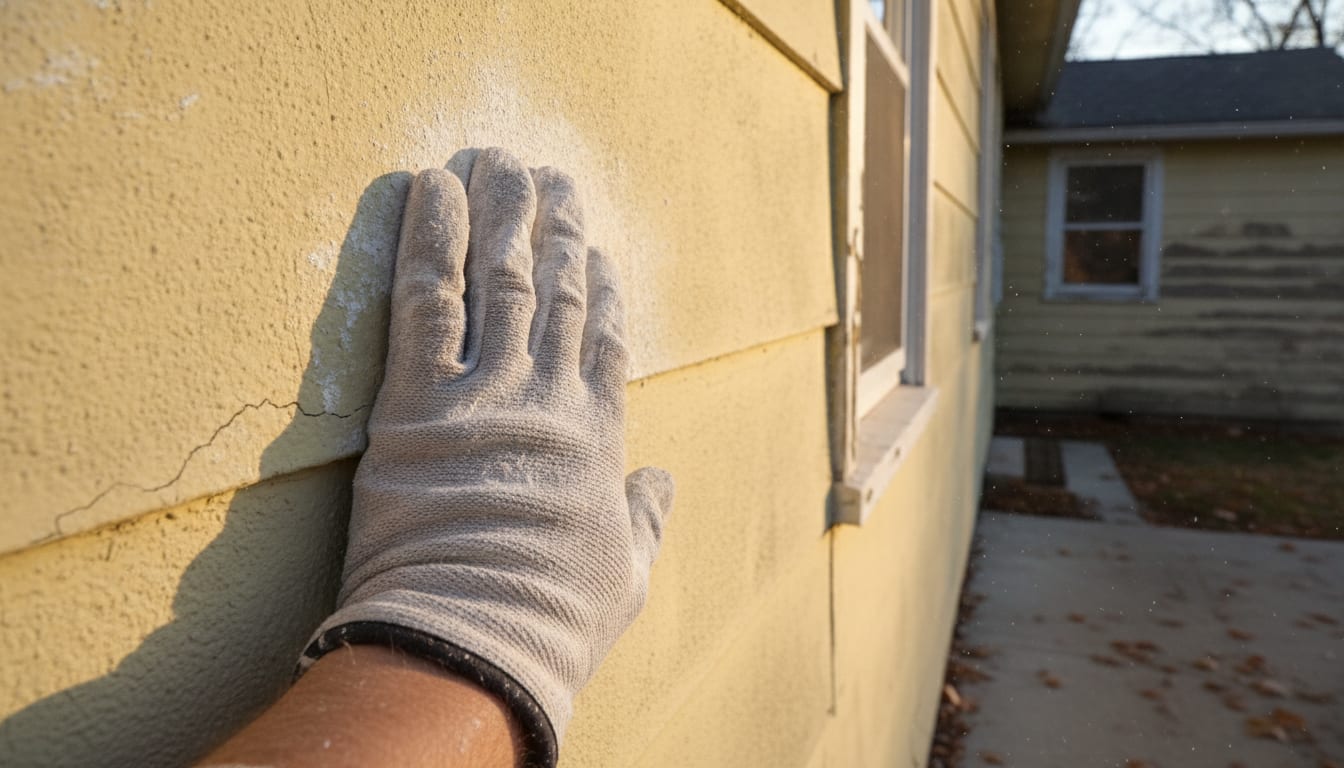
Rub your siding. Chalky residue means paint has broken down from Kansas sun. Learn the hand test and why Wichita metro homes need washing before repainting.
Walk up to the sunniest wall of your house — south or west side — and run your hand across it. If it comes away with a dull, powdery residue, like chalk dust, your paint is telling you something. That's called chalking, and it's one of the most common reasons an exterior repaint fails before it should, from Wichita out to Bel Aire, Park City, Kechi, Colwich, Clearwater, Rose Hill, Mulvane and Augusta.
What Chalking Actually Is
Paint is a binder holding pigment on your wall. Kansas sun is hard on that binder. UV breaks it down over years, and as it degrades, the pigment is left behind as loose powder sitting on the surface instead of bonded to it. That's the chalk you're feeling.
It shows up on south and west walls first, every time. Those are the faces that take the most direct sun through our brutal summers. The north side of the same house can look fine for years longer. If you've only ever checked the front of your house from the street, you may be missing where the real wear is happening.
The Hand Test, and Why It Matters More Than Looks
A wall can look okay from ten feet back and still be chalking badly. That's why the hand test matters more than a glance. Press your palm flat against the wall and wipe it like you're dusting a shelf. Powder on your hand means the coating has broken down. No powder, and the paint film is probably still intact, even if the color has faded some.
Fall is a good time to do this, before next spring's painting season fills up. You'll know where you stand instead of guessing, and if a repaint is coming, you can plan for it instead of reacting to it.
Why Paint Won't Bond Over Chalk
Here's the part that trips up a lot of people, including some who try to save money painting over a chalky wall themselves or hiring whoever's cheapest. New paint needs a clean, stable surface to grip. Chalk is neither. It's loose material sitting on top of the old coating, and if you roll new paint over it, you're bonding to powder, not to the house. The new coat will peel, sometimes within a season, and you're back where you started, except now you've paid for paint that never had a chance.
That's exactly why every exterior job here starts with a full power-wash of the entire home, before anything else happens. It's not an optional add-on and it's not sold by itself — it's step one, because paint will not bond to chalked paint, pollen, road film or mildew, and Kansas exteriors carry all four. Once the wall is washed down to a clean, sound surface, everything after that — filling nail heads and seams, scraping back anything loose, spot-priming bare spots, caulking every joint with Big Stretch, then coating with Sherwin-Williams SuperPaint on the body and Duration on the trim — actually has something to hold onto.
How This Plays Out Across the Metro
Older neighborhoods with original wood siding, and newer subdivisions out toward Andover or Goddard with vinyl or fiber cement, all chalk the same way under the same sun — it's a function of exposure and age, not construction era. If you're in an older home with a cut-bottom-edge hardboard siding from the Derby and older-suburb building boom, a chalky wall is also a good moment to check the bottom edges of the boards for softness while you're out there, since a thumbnail test takes thirty seconds and tells you if you're dealing with a paint problem or a bigger one.
Repaint Timing in This Climate
Most houses in the Wichita metro are due for a repaint somewhere in the 5 to 10 year range, but the wall tells you the real answer, not the calendar. A south wall in full sun might be due at year six. A shaded north wall on the same house might go twelve years without trouble. Once you know it's due, the window to actually get it done runs roughly April through October — exterior coatings need surface temperatures above about 50F for the whole cure, not just when you're rolling it on, and a warm fall afternoon followed by a cold night will ruin a coat before it's finished setting.
Get It Looked At Before You Commit to Anything
If your hand test comes back chalky, that doesn't automatically mean the whole house needs paint this year — it might be one wall, or it might be the whole exterior. Either way, an honest look beats a guess. Reflection Ridge Painting has been doing exteriors across Wichita and the surrounding metro since 2011, and the estimate is free, on-site, and comes with the full price up front — no number that grows once the work is open. You don't even need to be home; Adam measures it, prices it, and leaves the bid in your mailbox.
Call (316) 350-1111 to get a free estimate scheduled, or have Adam take a look if you're not sure whether what you're seeing is chalking, fading, or something underneath that paint alone won't fix.
Frequently Asked Questions
How do I know if my paint is chalking or just faded?
Faded paint has lost color but the film is still intact and smooth to the touch. Chalking paint leaves a powdery residue on your hand when you wipe it — that's the giveaway. Fading alone doesn't stop new paint from bonding; chalk does.
Can I just paint over chalky siding to save time?
No — new paint bonds to a clean surface, not to loose powder sitting on top of old paint. Painting over chalk usually means the new coat peels early, sometimes within a season, because it never actually grabbed onto the house. Washing it off first is what makes the new coat last.
Why does the south or west side of my house chalk first?
Those walls take the most direct sun through Kansas summers, and UV is what breaks down the paint binder that holds pigment to the surface. The north side of the same house, with less direct exposure, can hold up noticeably longer before showing the same wear.