Swollen Hardboard Siding Bottom Edge: Check It Before Winter
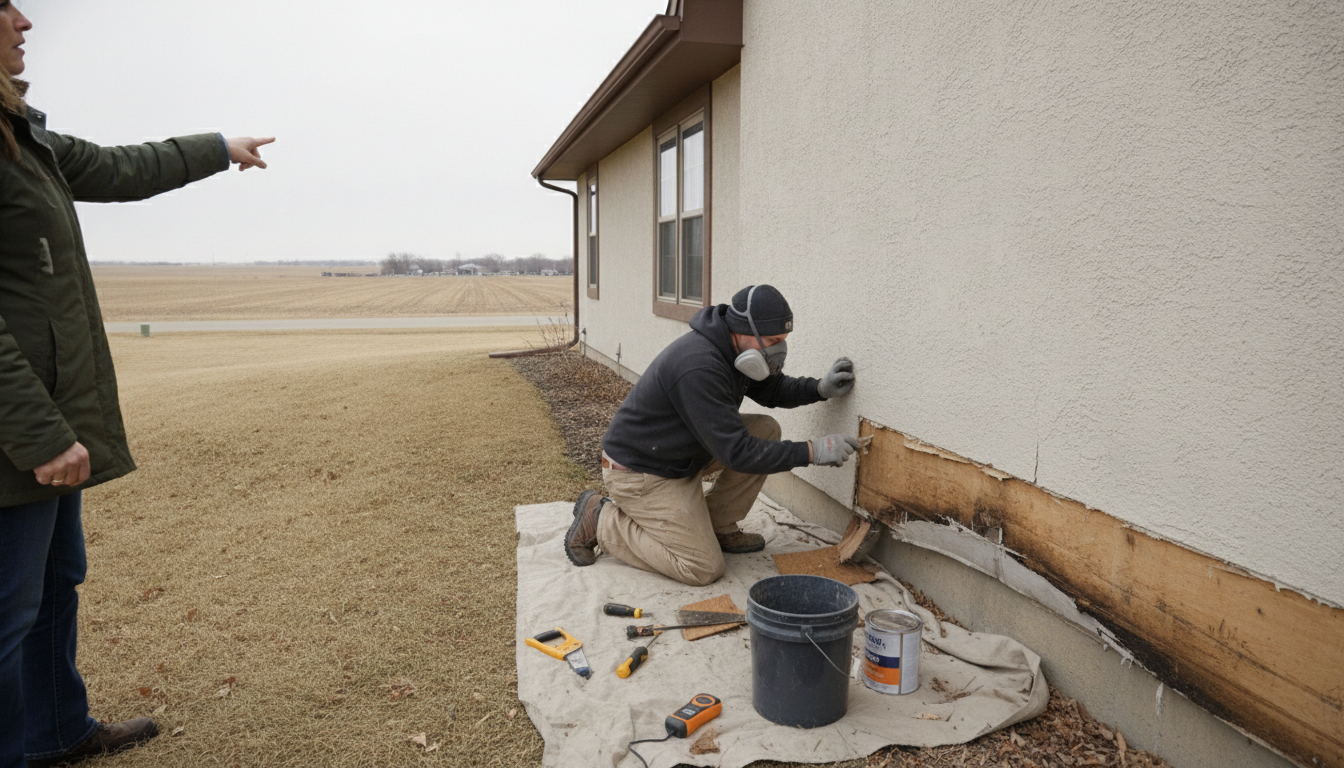
Soft, swollen siding at the bottom edge? Painting over it only buys a season. Here's how Wichita metro homeowners should check now, before winter moisture sets in.
Walk outside right now and press a thumbnail into the bottom few inches of your siding, especially on the north side where things stay damp longest. If it gives like wet cardboard, you've found a problem that a new coat of paint will not solve. This is the time of year to check, because winter moisture is about to make it worse.
Why the Bottom Edge Fails First
Composite hardboard siding was used on a huge number of homes built from the late 1970s through the 1990s, and it's especially common across Derby and Wichita's older suburbs. It's a wood-fiber product, and the factory sealant on the cut bottom edge is the only thing keeping water out of that fiber. Once that edge is compromised — by a sprinkler hitting it daily, gutters overflowing, or just age — the board wicks water upward like a paper towel. It swells, goes soft, and starts to separate in layers. You'll usually see it as puffiness or a slight outward bow right along the bottom of the board, sometimes with paint bubbling or peeling in that exact spot no matter how many times it gets repainted.
Painting over swollen hardboard doesn't fix anything. It seals moisture into wood fiber that's already breaking down, and the board keeps rotting behind the new coat. You get a season, maybe two, before it's back — and by then more of the wall is compromised than when you started.
Why Check Now, Before Winter
Kansas winters bring freeze-thaw cycles that are hard on any building material, and wet wood fiber that freezes and expands breaks down faster than wood fiber that stays dry. If a board is already holding moisture going into December, that cycle accelerates the damage all winter. Catching it now — while it's still exterior painting season and repairs are still practical — means Adam can look at it, tell you honestly whether it's a board or two or a full elevation, and get it fixed before the freeze does more damage. Hail-damaged siding in Valley Center and storm-battered elevations anywhere in the metro follow the same logic: the sooner it's assessed, the less it costs you in avoidable rot.
What to Look For, Wall by Wall
South and west walls take the hardest UV beating in this climate and tend to chalk and fade first — that's a paint problem, not a siding problem, and you'll know it by the powder that comes off on your hand. The bottom-edge swelling we're talking about here shows up more on whichever wall holds moisture longest, often the north side or anywhere gutters have been dumping water against the foundation. Check under downspouts, behind shrubs that block airflow, and around any spot where sprinklers hit the wall directly.
Repair or Replace, Then Paint — Not the Other Way Around
This is the whole reason Reflection Ridge Painting handles siding and painting under one roof instead of referring the siding out like most painters do. If Adam finds soft boards during an exterior estimate, he'll say so plainly — replace what's failed, then paint, not paint over it and hope. The good news for most houses: it's usually one or two elevations, not the whole home. Once the boards are sound, the same process applies as any exterior job here — full power-wash, fill every nail head and seam, scrape and spot-prime, caulk every joint with Big Stretch caulk, then Sherwin-Williams SuperPaint on the body and Sherwin-Williams Duration on the trim. Big Stretch matters more than people think in this climate — a rigid caulk splits open at the joints that keep water out once summer heat gives way to winter freeze, and a split joint is exactly how this whole problem starts over again.
This applies whether you're in a hardboard-sided ranch in Haysville, a rental property in the metro, or a newer build on the edges of Wichita. It also applies to house painters working in Bel Aire, Park City, Kechi, Colwich, Clearwater, Rose Hill, Mulvane and Augusta — the housing stock and the climate don't change much across the metro, and neither does the fix.
Get an Honest Look Before You Commit to Paint
Estimates are free and on site, and you don't need to be home for an exterior bid — Adam measures, prices it and leaves the full estimate in your mailbox. If there's a locked gate or animals in the yard, just mention it. Jobs start within 7 to 10 business days of getting in touch, and every estimate carries the full price up front, not a number that grows once the work is open. Call (316) 350-1111 to get someone out to look at it.
Frequently Asked Questions
How do I know if my siding is really failing versus just needing paint?
Press a thumbnail into the bottom few inches of a board. If it's firm, it's likely a paint issue — chalking or peeling that a proper prep and repaint will fix. If it gives or feels spongy, that's the fiber itself breaking down, and no coating will stop it. Worth having it looked at before you commit to either job.
Can you just replace the bad boards instead of the whole wall?
Often, yes. It's usually a section rather than an entire elevation, especially where the damage is tied to a specific cause like a gutter or sprinkler. Adam can tell you exactly what needs replacing versus what's still sound once he's looked at it.
Is it too late in the year to get this fixed?
Exterior work in this climate generally runs April through October, but a repair assessment can happen any time, and getting on the schedule now beats waiting through a winter of freeze-thaw cycles making it worse. Interior work runs year-round if that's a better fit for timing.