Why South and West Walls Peel First in Kansas: Fall Check
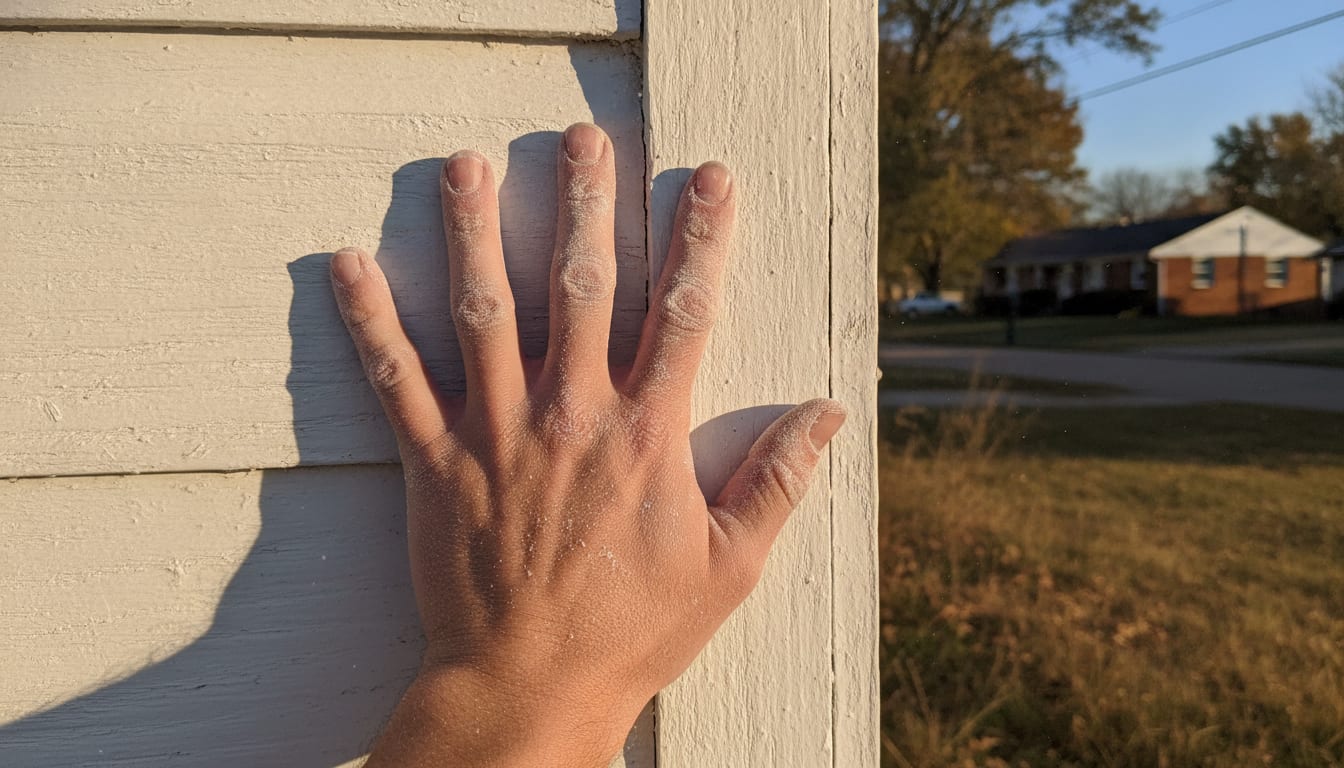
Why south and west walls chalk and peel first across Wichita, Bel Aire, Park City and the metro — and why fall is the time to check before you repaint.
Walk around your house some afternoon this fall and run a hand across the south wall, then the north wall. If the south side leaves powder on your palm and the north side doesn't, that's not dirt. That's the paint telling you something, and it's worth listening to before you book an exterior repaint anywhere from Bel Aire to Park City to Kechi.
Why the sun picks a side
Kansas UV is relentless, and it doesn't hit every wall the same. South and west walls take the long afternoon sun, day after day, year after year. North walls get a fraction of that exposure. Over time the UV breaks down the resin in the paint film that's supposed to hold the pigment together. The pigment is left sitting loose on the surface as a fine powder. That's chalking, and it's the single biggest reason the south and west sides of a house in Wichita, Derby, Andover or Goddard start looking tired years before the shaded side does.
It's not just UV, either. Those same walls take the brunt of our summer heat, baking all afternoon, then cooling fast once the sun drops. That swing stresses the paint film itself, which is part of why caulk joints on sunny walls tend to be the first ones to crack open — rigid caulk can't flex with that kind of temperature swing, and a split joint lets water behind the siding long before the paint itself looks bad.
What chalking means for a repaint
Chalking matters because paint will not bond to a chalky surface. Roll fresh paint over a powdery wall and it looks fine for a season, then fails early — peeling, flaking, sometimes in sheets. That's why every exterior job here starts with a full power-wash of the entire house, not just the bad wall. Nothing gets prepped and nothing gets coated until the chalk, pollen and road film are washed off and the surface can actually accept new paint.
After the wash, the process matters in order: fill every nail head and seam that could be letting water in, scrape and feather anything loose, spot-prime bare wood or repairs, caulk every joint with Big Stretch — the only caulk used here, because it flexes with the wood through our freeze-thaw swings instead of splitting at the seams that are supposed to be keeping water out. Then SuperPaint goes on the body and Duration on the trim, since trim takes the closest-up wear.
Why fall is a good time to look
The fall sun is lower in the sky but it's still doing UV damage, and a fall inspection catches a season's worth of wear before winter exposes every weak joint to freeze-thaw cycling. Exterior coatings need the surface above about 50F for the entire cure, not just at application, so there's a real window left before it gets too cold to paint reliably — a warm afternoon followed by a cold night will ruin a fresh coat. Get the sunny walls looked at now rather than waiting until spring.
It's not always just the paint
On older homes — the original wood siding around College Hill, Riverside and Delano, or the composite hardboard common in Derby and the older suburbs from the late '70s through the '90s — a chalky, peeling south wall sometimes means more than a repaint. Hardboard siding that's gone soft or swollen at the bottom edge won't hold paint no matter how good the prep is; it needs to be repaired or replaced first. That's the advantage of having painting and siding under one roof — the thing that actually failed gets fixed before anything goes over it, rather than painted over and left to fail again in a season.
Whether you're in a brick split-level in Wichita, a ranch in Haysville, or an older frame house in Rose Hill or Mulvane, the fix starts the same way: a look at the sunniest wall first, because that's where the clock runs out fastest.
Estimates are free and on site, and the price Adam gives you is the full price, not a number that grows once the job is open. For an exterior bid, nobody needs to be home — Adam measures it up and leaves the bid in your mailbox. Call (316) 350-1111 to get on the schedule; the job starts within 7 to 10 business days of getting in touch.
Frequently Asked Questions
Why does only one side of my house look chalky and faded?
That's UV breaking down the paint film and releasing the pigment as a fine powder, and it happens fastest on south and west walls because they take the longest, hardest sun exposure. North walls can look fine for years longer under the same roof.
Can you just paint over a chalky wall?
Not and expect it to last. Paint won't bond to chalk, which is why every exterior job here starts with a full power-wash of the whole house before any prep or painting begins.
How often should I expect to repaint in this climate?
Roughly every 5 to 10 years here, and where you fall in that range depends more on wall direction and siding material than the calendar. The real test is running a hand over the sunniest wall — if it leaves powder, it's due.