Siding Repair vs. Replacement After Kansas Hail: A Wichita Guide
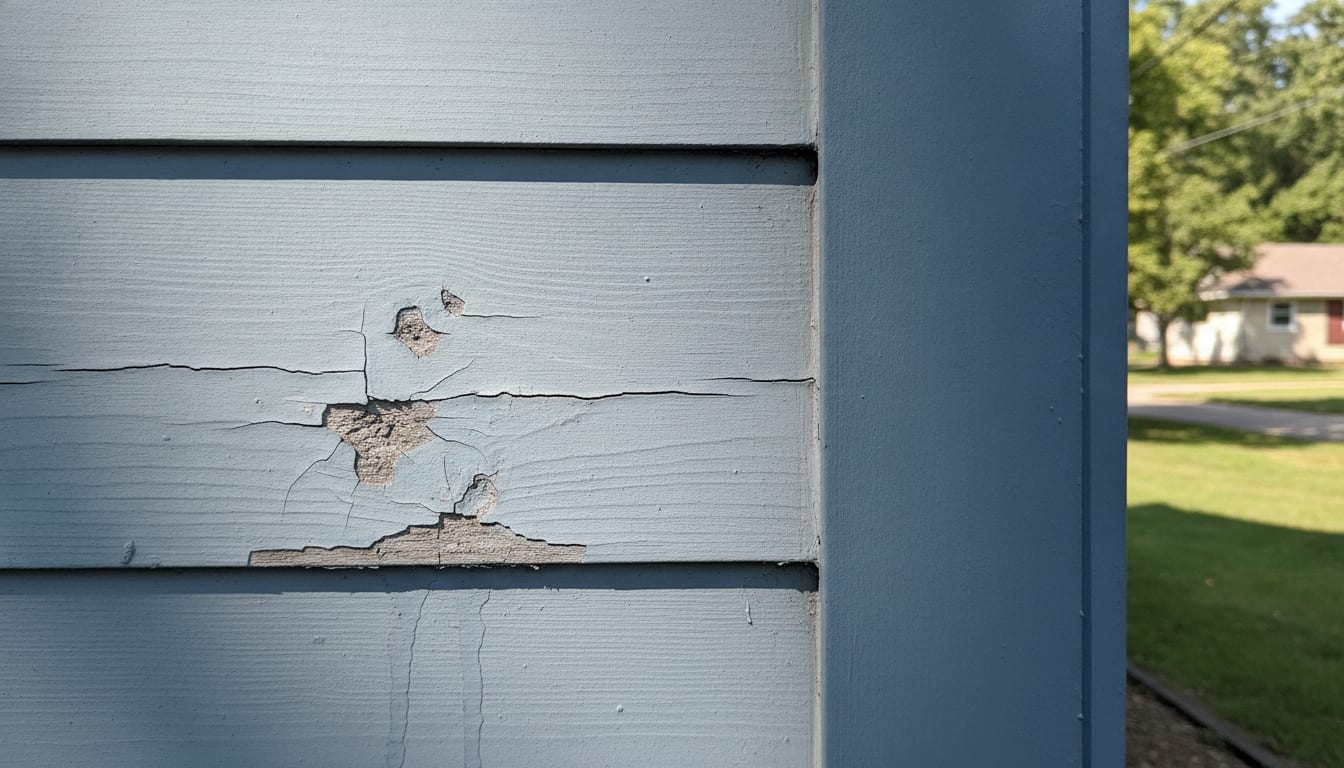
Hail-dented or cracked siding in the Wichita metro? Here's how to tell repair from replacement before winter sets in, from an owner-run painting and siding crew.
Summer storms in the Wichita metro leave more than dented cars. Hail bruises siding, cracks boards, and knocks loose the trim pieces that are keeping water out of your walls. If you had a hailstorm roll through this summer and haven't looked closely at your siding since, now's the time — not in January, when a soft board has had all winter to freeze, thaw, and get worse.
We're Reflection Ridge Painting & Siding, and we've been doing both painting and siding repair under one roof in Wichita since 2011. That combination matters here: most painters refer siding work out to somebody else. We fix what actually failed first, then paint it. So when people ask us whether hail damage means repair or full replacement, here's how we walk through it.
What hail actually does to siding
Hail doesn't usually destroy a wall outright. It dents, cracks, and chips — and on older composite hardboard siding, common across Derby and a lot of the older Wichita suburbs built from the late 1970s through the 1990s, a hail strike can crack the face of a board that was already weak at the bottom edge from years of wicking up water. That's the swollen, soft bottom edge a lot of homeowners already know to look for. Add a hailstorm on top of that and you've got cracked boards sitting right where water already wants to get in.
Signs you're looking at repair
If the damage is scattered — a handful of dented or cracked boards, a cracked piece of trim, a dinged-up shutter — that's usually a repair job. The surrounding siding is sound, so there's no reason to replace the whole elevation. We patch in matching material, fix any trim, soffit or fascia that took a hit, then move into the normal exterior painting process so the repair blends in rather than standing out.
Signs you're looking at replacement
If the hail hit a wall that was already failing — soft at the bottom edge, bubbling, or coming apart in layers — repair won't hold. Hardboard siding that's wicked water for years doesn't come back because you patch a few boards next to it; the whole run is compromised. Same goes for a wall with damage spread across most of its surface rather than a few isolated spots. At that point full replacement of that elevation is the honest answer, even though it costs more up front than a patch.
We won't paint over siding that's failed just because painting is the cheaper-sounding fix in the moment. Paint over soft boards seals moisture in rather than keeping it out, and you're back to the same problem in a year or two, except now it's hidden under a fresh coat.
Why this matters before winter
Kansas swings hard from summer heat into winter freeze. A cracked board or open seam that lets water in during a fall rain will freeze that water come January, and freeze-thaw cycles are what turn a small crack into a bigger one. Checking hail damage now, while exterior work is still possible, beats finding out in March that a repair turned into a bigger job over the winter.
This applies whether you're in Wichita proper, Derby, Valley Center, Rose Hill, or any of the surrounding towns we cover. Hail doesn't respect city limits, and neither does freeze-thaw.
How we handle the call
Adam looks at the actual boards before anything gets quoted — not a satellite photo, not a guess off square footage. If it's a few damaged pieces, we tell you that. If a whole elevation needs to come off, we tell you that too, and why. Either way, the quote you get is the full price up front, not a number that grows once the work is open. That's true whether we're doing hail-damaged siding repair in Valley Center or a full hardboard tear-off in Derby.
Once the siding question is settled, the rest of the job follows the same process every exterior job here gets: power-wash the whole house first, fill every nail head and seam, scrape and sand what's failing, spot-prime, caulk every joint with Big Stretch — the only caulk we use, because rigid caulk splits in a Kansas freeze-thaw cycle and Big Stretch flexes instead — then Sherwin-Williams SuperPaint on the body and Duration on the trim.
Our prices are competitive because we're fast, efficient, and honest with you about what actually needs doing. No job is too big or too small to call about — a few hail-dinged boards or a full elevation, we'll look at either.
Get it looked at before winter
Estimates are free, on site, and there's no obligation. For an exterior bid you don't even need to be home — Adam measures it up and leaves the full price in your mailbox. Once you get in touch, the job starts within 7 to 10 business days. Call (316) 350-1111 and let's get your siding checked before the weather turns.
Frequently Asked Questions
How do I know if hail damage needs siding repair or full replacement?
It comes down to how widespread the damage is and whether the siding underneath was sound to begin with. A handful of scattered cracked or dented boards on an otherwise healthy wall is usually a repair. Damage spread across most of a wall, or hail hitting siding that was already soft or swollen at the bottom edge, usually means that section needs full replacement because the surrounding material is compromised too.
Can I just paint over hail-cracked siding instead of repairing it?
No — paint doesn't fix a cracked or failed board, it just seals moisture in behind it. A crack from hail gives water a path straight into the wall, and painting over it hides the problem rather than solving it. The board needs to be repaired or replaced before any paint goes on.
Does hail damage need to be assessed before winter?
Yes. Kansas swings hard between summer heat and winter freeze, and any crack or open seam that lets water in will go through repeated freeze-thaw cycles over the winter, which makes small damage worse. Catching it now, while exterior work is still possible, is a lot better than discovering a bigger problem in spring.